A Nashik-area buyer can receive very different quotations for the same drawing: one supplier may only press the blank, while another may weld, rivet, coat and inspect the completed subassembly. By the end, you will be able to define the required supply scope, compare Satpur, Ambad and Sinnar vendors, and verify whether their equipment and quality controls match your production needs.
Key takeaways
- Request drawings, material grades, tolerances and revision-controlled specifications.
- Confirm whether stamping, welding, riveting and inspection occur in-house.
- Match the assembly process to its vehicle-system load, environment and service life.
- Compare suppliers using quality records, logistics plans and total delivered cost.
Define the assembly before you compare suppliers
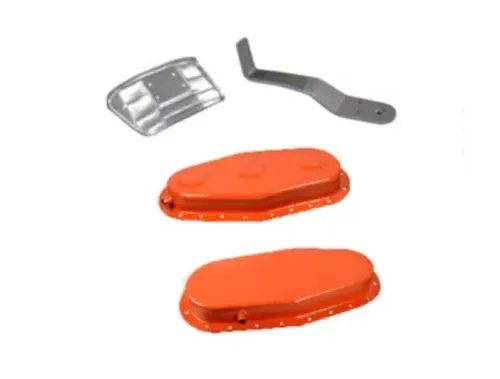
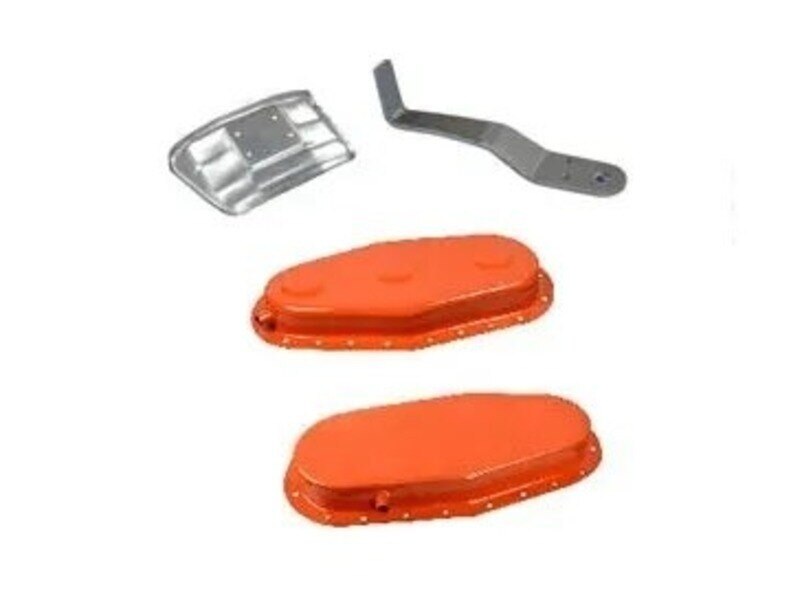
An auto press part assembly supplier should deliver more than stamped blanks. The quotation must define the complete route: blanking, piercing, bending assemblies or deep drawing; secondary tapping, welding, riveting or clinching; and final inspection, packing and traceability. It must also state which operations happen in-house and which are subcontracted.
| Supply scope | What you receive | What to confirm |
|---|---|---|
| Press-only parts | Blanked, pierced, bent or deep-drawn components | Material grade, thickness, tooling, tolerances and inspection report |
| Formed-and-joined parts | Brackets, clamps, housings or panels joined by spot welding, riveting, clinching or welding | Joint method, fixture control, weld access and subcontracted work |
| Finished subassembly | A verified assembly ready for your line, such as a welded bracket or riveted housing | Component count, orientation, fasteners, functional checks and packaging |
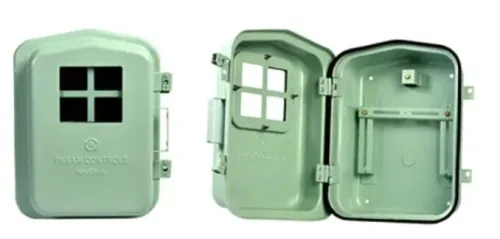
| Protective or electrical assembly | A part with bonding points, threaded features or mating faces | Contact-surface treatment, coating removal, continuity test and measurements before or after coating |
Request the part drawing or 3D CAD model, revision status, sample-approval process and control plan with the quote. Ask for press make, model, tonnage, bed size, shut height, die envelope and part-weight limits; adequate tonnage alone does not prove the tool will fit.
Require die-life assumptions, maintenance intervals, spare-tool arrangements and changeover time for repeat production. The supplier should identify whether delivery comes from Satpur, Ambad or Sinnar, because pickup frequency and truck access affect landed cost.
Match the assembly to its vehicle-system application
Start with the load path and joining method: an assembly for body-in-white does not automatically suit a braking component. Match the pressed shape, material, joint strength, corrosion exposure and inspection method to the vehicle system.
| Application | Suitable assembly work | Check before approval |
|---|---|---|
| Body-in-white | Blanking, piercing, bending, deep drawing, spot welding and laser-welded brackets, reinforcements or structural subassemblies | Confirm dimensional datums, weld access, distortion control and crash-related special characteristics |
| Exhaust components | Deep-drawn shells, formed brackets, clamps and welded heat-shield assemblies | Confirm stainless-steel grade, heat exposure, vibration life, weld discoloration and corrosion protection |
| Seating assemblies | Stamped recliner brackets, tracks, mounts, wire forms, riveted parts and welded frames | Check hole position, burr control, rivet pull-out strength and seat-load test requirements |
| Braking components | Precision brackets, pedal parts, backing plates, clips and formed-and-joined mounts | Control thickness, spring-back, fatigue performance, burrs and safety-critical traceability |
| Underbody and engine components | Pressed shields, housings, clamps, covers and threaded or clinched subassemblies | Check oil, salt-spray and temperature exposure, fastener torque and clearance to neighbouring parts |
Ask the supplier to identify every operation in the route: blanking, piercing, forming, tapping, welding, riveting, clinching and final inspection. A quotation is incomplete if it hides subcontracted operations, because each transfer adds handling, delay and a separate quality risk.
For protective bonding, specify the contact surface, coating removal or piercing method, fastener system and continuity-test limit. A painted joint that looks sound can still produce an unreliable earth path.
Check materials, drawings and achievable tolerances
A quotation needs a controlled drawing package, not just a part name and annual volume. Send the latest revision, required quantity, inspection standard and intended assembly function so the supplier can price the actual work.
1. Provide 3D CAD files in STEP or native format, a dimensioned 2D drawing, material specification and sample photographs. State mild steel grades, copper grades, temper, sheet thickness, surface condition and corrosion-protection requirements.
2. Mark functional datums and identify separate requirements for hole position, bend angle, flatness, perpendicularity and burr direction. Do not apply one general tolerance to every feature; that can add machining and inspection cost without improving fit.
3. Define formed geometry after unloading, including bend radius, profile dimensions and allowable springback. Grade, thickness, grain direction, tooling condition and bend radius affect springback, so request first-off inspection on the released part, not only the flat blank or press program.
4. Identify holes, threads, mating faces and electrical bonding points that coating could affect. Specify whether each dimension is measured before coating, after coating or at both stages.
5. State whether the quotation includes blanking, piercing, bending, drawing, tapping, welding, riveting, clinching and final assembly. Ask for batch traceability linking each part to the heat or coil certificate, production batch, drawing revision and any outsourced finish.
Ask the supplier to return confirmed tolerances, exclusions, tooling assumptions and any dimensions they cannot hold consistently. That response reveals achievable capability before the purchase order.
Verify presses, dies and joining methods
A supplier with adequate press tonnage can still be unsuitable if the press bed or shut-height range cannot accept your tool. Ask for the press make, model and capacity matrix for the proposed route, then compare it with the die envelope, shut height, stroke, feed width and part-weight limits.
The route should name the operation, not merely say “stamping”: blanking, piercing, bending or deep drawing may require progressive dies, compound dies or transfer pressing.
Request these records before approving the quotation:
- Press bed dimensions, available tonnage, operating speed and the number of qualified machines
- Die layout, tool revision, expected die life, preventive-maintenance interval and spare-tool plan
- Changeover time, press-availability record and backup capacity if the only suitable machine is down
- Joining equipment, including resistance spot welding capacity, electrode access, weld-current monitoring and fixture repeatability
- A scope sheet showing which forming, tapping, welding, riveting, clinching and inspection operations are in-house or subcontracted
Check a sample assembly for distortion, burrs, springback, weld nugget consistency and fixture marks. Ask for the control plan and records linking the part batch to the tool revision and any outsourced operation. A supplier that cannot show this route, equipment and backup evidence is offering capacity on paper, not a dependable production process.
Compare Nashik suppliers on quality, logistics and total cost
Shortlist on landed cost and production evidence, not the lowest press-rate quote. Treat Satpur industrial area, Ambad MIDC and Sinnar industrial area as separate sourcing options because truck access, pickup frequency and travel time can change the delivered cost.
| Location | Logistics question | Cost implication |
|---|---|---|
| Satpur industrial area | Can the supplier load your vehicle during your required pickup window? | Shorter collection routes can reduce urgent-trip expense. |
| Ambad MIDC | Can it support repeat dispatches and segregated lots? | Frequent pickups may lower line-side inventory. |
| Sinnar industrial area | Can it meet your plant’s delivery window without a dedicated truck? | Longer routes can increase freight and delay exposure. |
Reject any quotation that does not identify blanking, piercing, bending, deep drawing, tapping, welding, riveting, clinching and final assembly as in-house or subcontracted operations. Ask for the proposed press make, model, tonnage, bed size, shut-height range, die envelope and part-weight limit; adequate tonnage alone does not prove tool compatibility.
Audit APQP PPAP FMEA, control plans, MSA and SPC as one connected system. ISO 9001 certification alone does not demonstrate automotive PPAP capability. Request a first-off report showing unloaded formed geometry, because springback changes with grade, thickness, grain direction, bend radius and tool condition.
Also check preventive-maintenance records, die-life assumptions, spare-tool arrangements, changeover time and the number of qualified presses. Param Controls belongs in the comparison only after it provides the same evidence and landed-cost breakdown as competing suppliers.
Related product
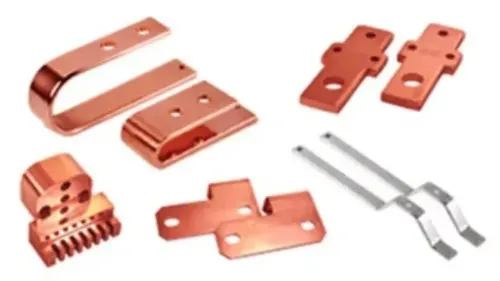
 | Sheet Metal Parts Press Metal Components are made with MS sheet and copper flats. View product → |
Frequently asked questions
What should an auto press part assembly supplier include in a quotation?
Request the complete route: blanking, piercing, bending or deep drawing, secondary tapping, welding, riveting or clinching, final inspection, packing and traceability. Ask which operations are in-house and which are subcontracted.
How do you match a press part assembly to its vehicle-system application?
Define the assembly’s location, loads, vibration, temperature, corrosion exposure and service function before comparing processes or suppliers. A structural bracket, battery enclosure component and exhaust shield need different material and joining decisions.
Which documents and specifications should you check before placing an order?
Check the latest drawing revision, material grade, thickness, surface finish, dimensional tolerances, datum scheme, inspection plan and traceability requirements. Require controlled records for any approved deviation.
How can you compare Nashik suppliers beyond the quoted piece price?
Compare in-house equipment, die capability, joining controls, inspection records, capacity, lead time, packing, freight, rejection handling and subcontracting exposure. Calculate total delivered cost rather than comparing the unit price alone.