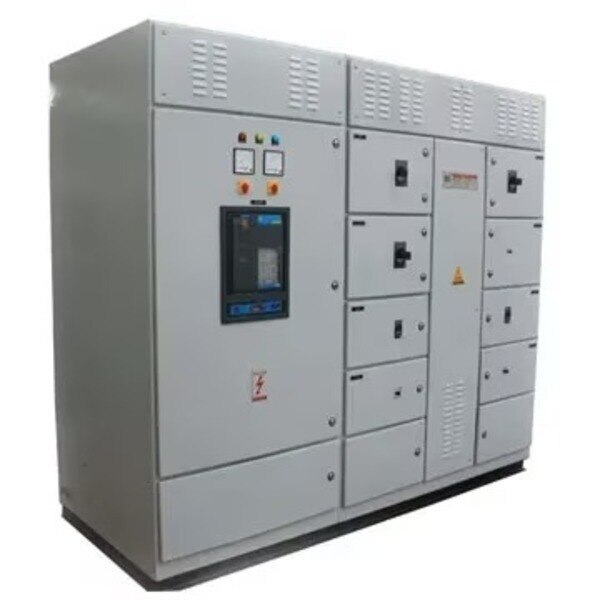
A power distribution panel is the point where an incoming electrical supply is divided into protected feeders for production equipment, lighting, services, and other loads. By tracing that power path and checking capacity, fault level, isolation, environment, and expansion plans, you can decide whether your factory needs a dedicated panel or can use existing equipment.
Key takeaways
- Use a dedicated panel when feeders need separate isolation, protection, or expansion capacity.
- Trace power from the incomer through busbars, breakers, feeders, and downstream boards.
- Compare panel ratings, fault withstand, enclosure protection, spare ways, and maintenance access.
- Coordinate breaker settings so the nearest protective device clears a fault first.
What a Power Distribution Panel Is and Where It Fits
A power distribution panel receives electrical power at one point, protects outgoing circuits, and routes that power to feeders serving production equipment or smaller boards. It normally provides incoming isolation, busbar connection, outgoing overcurrent protection, and circuit identification. It distributes electricity; it does not control motor speed or perform a specialised process function.
The term is functional rather than one single regulatory equipment category. In U.S. practice, the exact classification may be a panelboard under NEC Article 408 and UL 67, a switchboard under UL 891, or an industrial control panel under NEC Article 409 and UL 508A.
That classification determines the construction and compliance information you must verify.
| Assembly | Primary job | Defining difference |
|---|---|---|
| Power distribution panel | Routes power to feeders | General-purpose distribution for an area or process |
| PCC | Distributes high-current factory power | Usually a larger power-control centre with substantial feeder capacity |
| Main switchboard | Receives the main supply | Sits near the service, transformer, or generator incomer |
| Switchgear assembly | Switches and protects circuits | Uses equipment designed for isolation and fault interruption |
| MCC | Supplies and starts motors | Groups motor starters, overload protection, and motor feeders |
| Final distribution board | Feeds local end-use circuits | Sits close to machines, outlets, or lighting loads |
Under IEC 61439, a low-voltage distribution assembly is verified as a complete design, not assembled from any convenient mix of rated parts. Changing major components can invalidate that verification.
An APFC panel corrects power factor, while a drive panel controls motor speed. A power distribution panel supplies them; it does not replace them.
How Power Travels Through a Factory Panel
Power reaches the panel through a utility incomer or generator incomer. If both sources are available, an automatic transfer switch or mechanically interlocked changeover prevents them from feeding the same bus at once.
Incoming cables terminate at the main isolator, which provides a visible means of isolation; the circuit breaker also interrupts overload and short-circuit current.
The power path is:
- Source incomer → main isolator and main circuit breaker
- Main breaker → copper or aluminium busbars
- Busbars → individual outgoing feeder circuit breakers
- Feeder breakers → cables, local isolators, and production equipment
Busbars act as the panel’s common distribution points. Each outgoing feeder taps them and carries power at the panel’s distribution voltage to a defined area or machine, while its breaker limits damage if that feeder develops a fault.
A feeder can terminate at a downstream assembly or at the equipment itself. A local disconnect then lets maintenance isolate one machine without shutting down unaffected production.
Protection must be coordinated along this route. A downstream fault should trip the nearest suitable breaker first, preserving power elsewhere; settings that improve selectivity can increase arc-flash energy. The panel’s short-circuit current rating must also withstand the available fault current at its installation, not merely match the largest breaker.
When Your Factory Needs a Dedicated Panel
A separate panel is justified when the existing board cannot safely serve the factory’s calculated demand, fault level, layout, or operating needs. A small facility can retain one board if its feeder rating, available fault current, enclosure space, conductor sizes, and protective devices comply with the applicable code.
| Condition | Existing board may suffice | Dedicated panel is justified |
|---|---|---|
| Additional capacity | Spare ways and bus capacity cover the calculated load | New outgoing feeders would overcrowd the board or exceed its rating |
| Distance | Production loads are close to the existing board | Long cable runs create voltage drop, difficult maintenance, or a poor factory electrical distribution layout |
| Isolation | One shutdown affects only a small area | Separate feeder isolation is needed for production lines, utilities, or hazardous work |
| Expansion | No major load growth is planned | New machines, transformers, generators, or process lines are expected |
| Load type | Loads have similar voltage and operating behaviour | Motors, welders, drives, or cyclic equipment need separate protection and segregation |
Use a dedicated panel when a transformer or generator supplies a remote production area, when voltage transformation is required, or when physical separation keeps a fault from stopping unrelated equipment. An MCC panel is the better choice when motor starting and control are the main functions; use a distribution panel for feeder supply.
Coordinate its breakers with upstream and downstream devices. Poor coordination can trip the whole plant after one feeder fault, while aggressive selectivity settings can increase arc-flash energy and equipment cost.
What to Specify and How to Compare Panel Types
Choose a simple distribution board when one incomer, modest rated current, few outgoing feeders, and a known fault level cover the loads. Choose a PCC when several production feeders, large motors, generators, transformers, or future capacity require central switching and protection.
Specify a larger switchboard when the incomer and bus system must handle high current, multiple sources, bus-couplers, or extensive segregation.
| Option | Specify | When it fits |
|---|---|---|
| Simple distribution board | Supply voltage, phases, rated current, feeder count, enclosure rating, and available fault current | A small facility with short feeder runs and ordinary lighting, socket, or equipment loads |
| PCC | Incomer arrangement, busbar rated current, feeder ratings, motor and transformer loads, metering, isolation, and coordination study | Several major production feeders need central control, selective protection, or expansion space |
| Main switchboard | Multiple incomers, tie breaker, bus-section rating, short-circuit withstand, segregation, and maintenance access | High-capacity plants with utility and generator sources or multiple distribution sections |
Do not accept a panel’s SCCR as an isolated marketing number. Compare it with the prospective fault current at the installation point; the assembly rating must not be lower, and a UL 508A panel can be limited by its lowest-rated component or a documented protective-device combination.
Under IEC 61439, treat the assembly as verified for temperature rise, dielectric strength, short-circuit withstand, protective-circuit effectiveness, and mechanical operation. Changing busbars or enclosure dimensions can invalidate that verification.
Give Param Controls the transformer capacity, calculated demand, fault level, feeder schedule, and expansion forecast before comparing quotations. That information exposes an undersized board faster than a higher component count does.
Related products
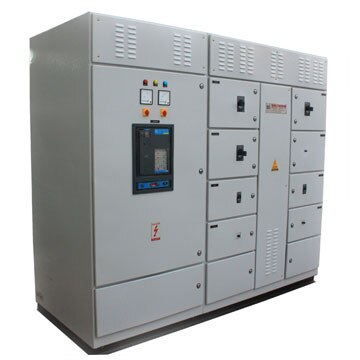 | Electrical Control Panel Reliable & Efficient Electrical Power Distribution Solutions Param Controls manufactures and supplies Power Distribution Panels designed for the... View product → |
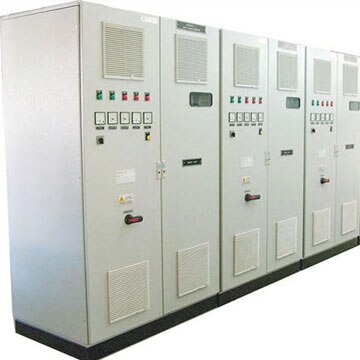 | Electrical Control Panel PCC Panel - PPC Electrical Panel Power Control Center Panels for Reliable Industrial Power Management Param Controls manufactures and supplies PCC (Power Control Center) Panels... View product → |
Protection, Coordination, and Conditions That Affect Reliability
A safe factory distribution system starts with protective devices matched to the fault current and load. Overload protection limits sustained excess current; short-circuit protection clears high-current faults; earth-fault protection detects current escaping to ground. The panel’s short-circuit current rating (SCCR) must exceed the prospective fault current at its installation point.
For a UL 508A industrial control panel, Supplement SB calculations can make the lowest-rated component, or a documented device combination, the limiting factor.
Specify and verify these points:
- Check the panel SCCR, breaker interrupting ratings, busbar withstand rating, and feeder ratings against the calculated available fault current.
- Apply selective coordination so a downstream feeder fault trips that feeder first, preserving power to unaffected production areas. Maximum selectivity can require current-limiting devices, higher-cost breakers, or adjusted instantaneous trips, which can increase arc-flash energy.
- Confirm the assembly’s verification. IEC 61439 covers temperature rise, dielectric properties, short-circuit withstand, protective-circuit effectiveness, and mechanical operation; unapproved busbar, device, or enclosure substitutions can invalidate that verification.
Dust, moisture, corrosive vapours, heat, vibration, and poor ventilation shorten service life. Choose an enclosure suited to the environment, maintain clearances, and prevent blocked cooling paths.
Maintenance requires an access plan, de-energized inspection, connection-torque checks, cleaning, insulation or protective-device testing, and updated circuit labels. Arc-flash labels and energized-work procedures remain separate safety controls; an incident-energy analysis determines the boundary and required PPE.
Frequently asked questions
What is a power distribution panel?
It is an assembly that receives electrical power, connects it to busbars, protects outgoing circuits with devices such as circuit breakers, and routes power to equipment or downstream boards.
When does a factory need a dedicated power distribution panel?
A factory needs one when production areas or equipment require separate feeders, local isolation, dedicated overcurrent protection, clearer circuit identification, or capacity for planned expansion.
How does power travel through a factory distribution panel?
Power enters through an incoming isolator or main breaker, reaches the busbars, passes through outgoing protective devices, and leaves through feeders supplying machinery or smaller distribution boards.
What should you compare when specifying a power distribution panel?
Compare the voltage and current ratings, short-circuit withstand rating, breaker type and settings, number of outgoing ways, spare capacity, enclosure rating, busbar material, cable entry, and access for inspection and maintenance.