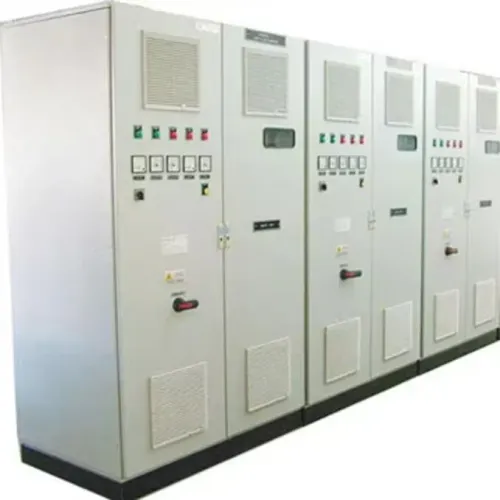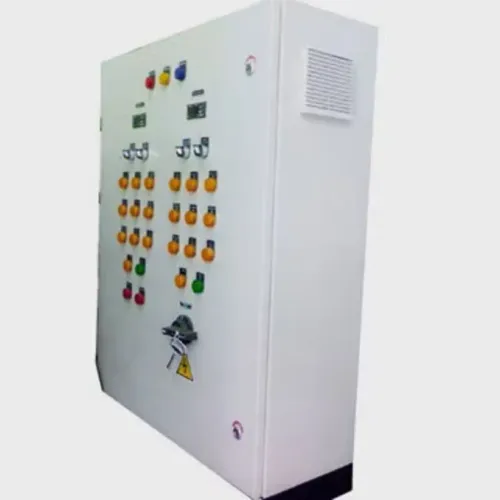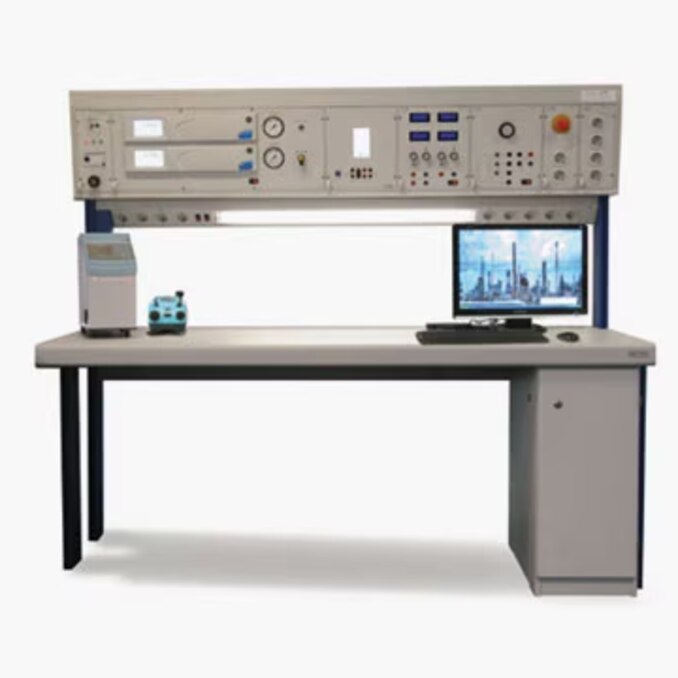
A suitable test bench must do more than apply a high voltage: it must match the device under test, control hazardous energy, produce defensible measurements, and preserve the evidence behind every pass or fail decision. By the end, you will have a practical checklist for comparing test scope, electrical ratings, fixtures, safety systems, instruments, software, and supplier acceptance support.
Key takeaways
- Map every test step to the applicable product or assembly standard.
- Require protective-bond, insulation, dielectric, functional, and residual-voltage checks.
- Verify switching logic, interlocks, emergency stops, and fault protection before purchase.
- Demand calibration certificates, measurement records, and a witnessed acceptance test.
Start With the Required Test Sequence and Standards
Choose a bench that executes a documented test sequence and maps every result to the applicable product or assembly standard. For a control panel, require protective-bond continuity, insulation resistance testing, dielectric withstand testing, functional testing for control panels, and residual-voltage checks; a hipot instrument alone leaves routine verification incomplete.
Ask the supplier to provide:
- The required test sequence, acceptance limits, test duration, waveform, ramp rate, and leakage limit for each product configuration.
- Controlled, versioned profiles rather than an operator-entered voltage that can be set incorrectly.
- A switching matrix that prevents dielectric withstand testing from reaching PLC I/O, instruments, communication ports, or low-voltage accessories, or requires a positively controlled isolation sequence.
- A cross-reference showing which checks are universal, option-dependent, or derived from the approved design.
- Change control for test programs, wiring maps, limits, fixture drawings, and software.
| Standard | What the supplier must demonstrate | Risk if missing |
|---|---|---|
| IEC 61439 | Map routine verification to protective-circuit continuity, clearances and creepage, component incorporation, internal wiring, mechanical operation, dielectric properties, and functional testing. | A pass on insulation and hipot can hide construction or wiring defects. |
| UL 508A and/or NFPA 79 | Show the North American sequence, construction evidence, markings, test conditions, and records required for the intended market. | An IEC-based workflow can produce incomplete or incorrect compliance evidence. |
The test voltage is not universal: rated insulation and the governing standard determine its value. Require the approved standard edition and design calculation behind every limit.
Check Electrical Ratings, Switching Logic, and Protection
A bench is suitable only if its supply voltage and current capacity cover the load without overstressing wiring, sources, or protective devices. Confirm the available single-phase and three-phase input, rated test voltage and frequency, maximum output current, and short-circuit withstand at the point of connection.
Do not accept an instrument’s headline voltage rating as proof of safe integration. For a mixed-voltage control panel, request the complete switching matrix and its fault assumptions. The logic must prevent a withstand voltage from reaching PLC I/O, instruments, communication ports, or low-voltage accessories, or enforce a positively controlled isolation sequence before testing.
Require the supplier to demonstrate these safeguards:
- Guarded test area or equivalent barrier, with door or fixture interlocking
- Emergency stop that removes hazardous energy through a defined circuit
- Warning indication before and during high-voltage testing
- Controlled voltage ramping, rather than an abrupt application
- Automatic discharge with a specified discharge path and waiting time
- Residual-voltage measurement at named accessible terminals, with a stated pass limit
- Interlocks that block test initiation when the fixture, protective earth, or switching state is wrong
Residual-voltage control matters when the panel contains capacitors, filters, drives, or long cable runs. An emergency-stop button alone does not prove that stored energy has been removed; ask for the measured safe-access condition and the fault response.
For panel work, verify that the switching sequence covers protective-bond continuity, insulation resistance, dielectric withstand, functional operation, and residual-voltage checks as separate activities. A hipot tester alone is not a complete safety system.
Match the Workstation and Fixtures to the Device Under Test
A panel that fits the worktop can still fail as a production station if its terminals are buried or the operator must hold probes by hand. Confirm worktop dimensions and working height against the largest DUT, including door swing, enclosure depth, lifting space, and reach to every connection.
Specify fixture mounting and adapters for each product variant, not a generic plate with drilled holes. The fixture must locate the DUT repeatedly, withstand its weight, prevent reversed loading, and allow quick changeover without tools that slow the line.
Check cable routing and operator access so leads cannot cross pinch points or block the emergency stop.
For low-resistance protective-bond measurements, require four-wire Kelvin measurement. Ask how the design compensates for fixture, cable, and contact resistance; a two-wire reading includes those unwanted resistances and can misclassify a sound bond.
Require the supplier to provide:
- A complete cycle time covering loading, door closure, contact verification, prechecks, measurement, discharge, result storage, and operator prompts.
- Contact verification for every required test point, rather than relying on a manually held probe.
- A defined discharge path, waiting time, measurement point, and pass limit for panels containing capacitors, filters, drives, or long cable runs.
- A throughput demonstration using your largest panel and the actual fixture, adapters, and operator sequence.
Fast instruments do not rescue a slow fixture.
Demand Measurement Evidence, Calibration, and Traceability
A calibration certificate alone does not prove that the bench will detect a production failure. Require evidence that covers the actual ranges used, not merely the instrument’s nameplate capability:
- Voltage, current, resistance, leakage, and timing ranges
- Measurement accuracy and resolution at those ranges
- Repeatability and measurement uncertainty
- Environmental conditions during calibration
- Out-of-tolerance limits and the action taken after a failed calibration
The certificate should show ISO/IEC 17025 calibration traceability to national or international standards. Then compare the stated measurement uncertainty with the product’s pass/fail limit; ISO/IEC 17025 does not decide whether that uncertainty is acceptable for your test.
Test-program revision and result storage must connect every decision to a specific product. Require records containing:
- DUT or work-order identifier, operator, and timestamp
- Test-program revision, instrument identity, and calibration status
- Measured values, limits, and the pass/fail decision
A green screen without these fields cannot defend a result after a wiring change or customer dispute.
Ask the supplier to prove detection with your actual panel, fixture, cables, and operator workflow. The acceptance trial should include known-good units, deliberately introduced open bonds or insulation faults, borderline samples, and repeated tests after fixture reconnection. For low-resistance protective-bond tests, confirm four-wire Kelvin measurement and compensation for cable, fixture, and contact resistance.
For residual-voltage testing, demand the discharge path, waiting time, measurement point, and pass limit. Without them, capacitors or drives can leave hazardous voltage on accessible terminals after the test appears complete.
Compare the Supplier’s Scope and Prove the Bench Before Approval
A complete test system controls the sequence, isolates incompatible circuits, protects the operator, and produces usable records; an enclosure with a tester only provides a place to connect wires. Ask the supplier to identify every included item, from test instruments and meters to switching, fixtures, software, and result storage.
| Scope | Complete test system | Enclosure with tester |
|---|---|---|
| Tests | Continuity, earth-bond, insulation resistance, dielectric withstand, functional and residual-voltage checks | Usually one instrument, often hipot |
| Safety | Guarded area, protective devices and isolation transformers, emergency-stop controls and interlocks, controlled ramping, discharge, and safe-voltage confirmation | Enclosure and emergency stop without proving energy removal |
| Evidence | Wiring maps, switching matrix, limits, calibration records, software revision, and change management | Instrument datasheet and basic wiring |
Require factory acceptance testing before purchase, using your representative panel or a supplier-built equivalent. Make the trial prove these points:
- Run the approved sequence on pass and deliberately faulted samples; verify correct fail detection, circuit selection, interlock response, discharge, and access only after residual voltage is safe.
- Test every configuration, including PLC I/O, communication ports, low-voltage accessories, and mixed-voltage circuits. Confirm the switching matrix cannot apply withstand voltage to connected electronics.
- Check that reports identify the unit, operator, limits, measurements, software version, and failed step.
- Record open defects, agreed corrections, retest criteria, and ownership under change management.
Param Controls is one supplier to question on whether its quoted bench includes this evidence rather than only the metalwork and tester.
Related product
 | Reliable Electrical Testing Solutions for Industrial Applications Param Controls manufactures and supplies Electrical Test Benches designed for... View product → |
Frequently asked questions
Which tests should a control-panel test bench support?
Require protective-bond continuity, insulation resistance, dielectric withstand, functional control-panel testing, and residual-voltage checks. A hipot instrument alone does not cover the full sequence.
What electrical protection should you check in a test bench?
Check the bench’s voltage and current ratings, switching logic, interlocks, emergency stop, discharge controls, guarding, and protection against incorrect connections.
How do you verify a supplier’s measurement capability?
Ask for instrument specifications, current calibration certificates, calibration intervals, measurement uncertainty, test records, and traceability to national or international standards.
How should you approve a test bench supplier?
Compare the supplier’s design, fixtures, software, documentation, training, service scope, and acceptance criteria, then witness the bench completing representative tests before approval.