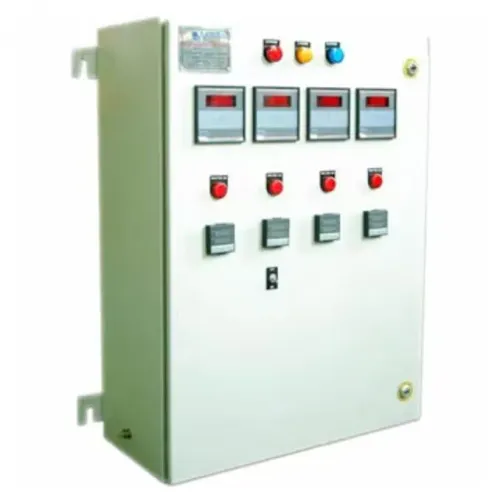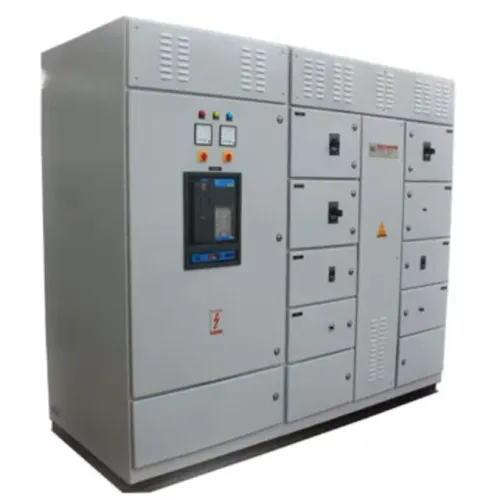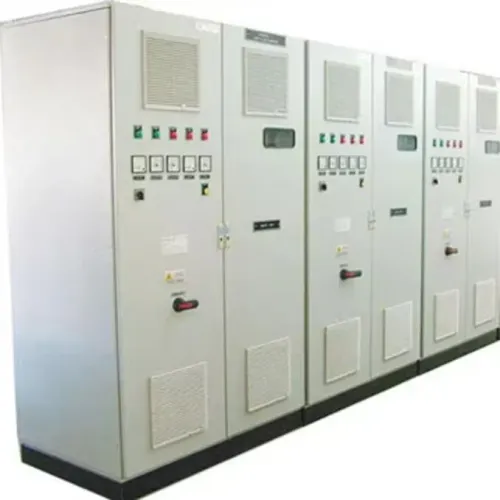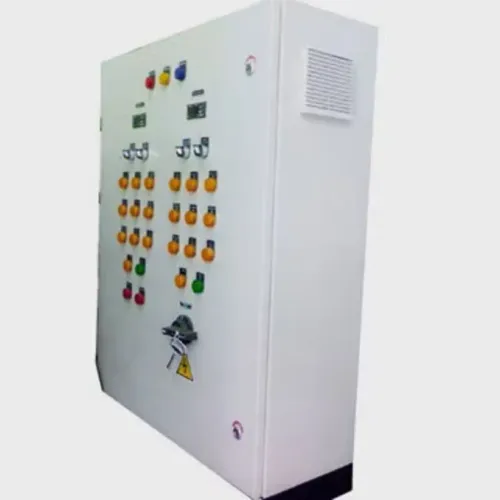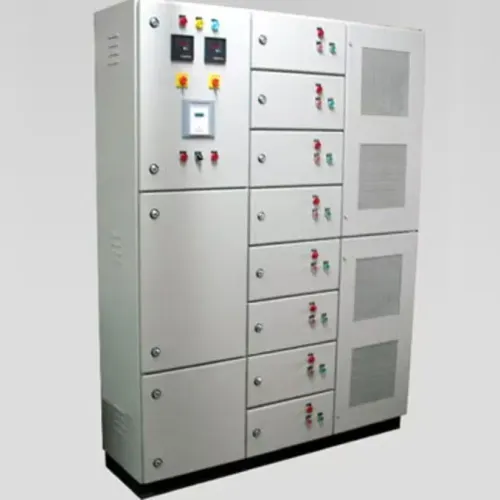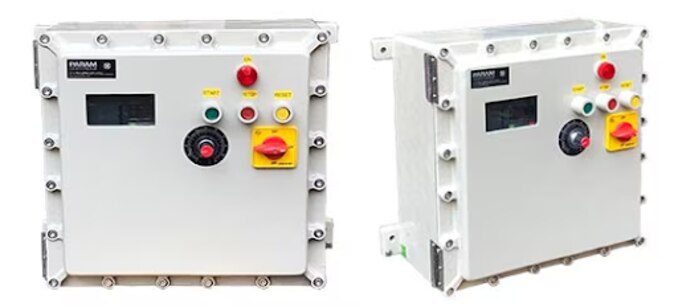
Flame-proof panels belong in areas where a fault inside electrical equipment could ignite gas, vapour, mist, or combustible dust outside the enclosure. By the end, you will be able to identify the industries and panel functions involved, distinguish Ex protection from ordinary weatherproofing, and check whether a proposed panel matches the site classification and certification documents.
Key takeaways
- Match the panel to the zone, gas or dust group, and temperature class.
- Install panels outside release sources when remote control is practical.
- Check nameplates for Ex markings, certification numbers, and enclosure ratings.
- Compare Ex d with purged, intrinsically safe, or non-hazardous-area installations.
Industries and work areas that use flame-proof panels
Flame-proof panels are used where a released gas, vapour, mist, or combustible dust could meet an electrical ignition source. Common locations include:
| Location | Hazard source | Typical panel work area |
|---|---|---|
| Oil and gas facilities | Crude oil vapour, natural gas, and condensate can escape from wells, separators, compressors, and transfer lines. | Pump, compressor, instrument, and local-control panels |
| Refineries | Hydrocarbon vapours surround process units, storage vessels, pipe racks, and loading points. | Motor starters, valve controls, and operator interfaces |
| Petrochemical plants | Solvents, monomers, and process chemicals release flammable vapours during reaction, transfer, or maintenance. | Dosing, instrumentation, and process-control panels |
| Tank farms and terminals | Vapour accumulates around tank vents, truck-loading arms, pumps, and marine transfer equipment. | Transfer-pump and local control stations |
| Chemical-processing units and pharmaceutical plants | Flammable solvents create vapour hazards during mixing, coating, filling, and cleaning. | Batch, dosing, and equipment-control panels |
| Paint shops and distilleries | Solvent vapour or alcohol vapour can form an ignitable atmosphere near spraying, storage, and filling areas. | Fan, pump, and production-line controls |
| Grain and flour mills, woodworking, and coal-handling areas | Flour, starch, grain, wood, or coal dust can form explosive dust clouds and layers. | Conveyors, elevators, feeders, and local starters |
| Mines and wastewater facilities | Methane, hydrogen sulphide, or other combustible gases can collect in underground workings, tanks, and treatment zones. | Ventilation, pumping, and monitoring controls |
For gas hazards, IEC zones commonly lead to Ex db or Ex db eb equipment in Zone 1 or Zone 2, but the certificate must match the gas group and temperature class. Dust locations need dust-specific approval; an IP-rated weatherproof enclosure alone does not contain an internal explosion or prove flame-path integrity.
How hazardous-area classification determines panel selection
A panel is suitable only when its certification matches the location’s hazard and installation classification. Identify whether the atmosphere contains flammable gas, vapour, mist, or combustible dust, then confirm the zone or division, required equipment protection level, and operating conditions.
For an IEC or ATEX project, check these details on the marking plate and certificate:
- Protection concept, such as Ex d for flame-proof construction or Ex t for dust protection
- Gas group, such as IIA, IIB, or IIC, or dust group IIIA, IIIB, or IIIC
- Temperature class, such as T4 or T6, against the substance’s ignition temperature
- Equipment protection level, such as Gb for Zone 1 or Gc for Zone 2
- Ambient-temperature range, certificate number, and certificate scope
Ex d equipment is commonly selected for Zone 1 and Zone 2 gas locations, but it is not automatically suitable for every Zone 1 site. A Zone 0 installation requires equipment with the appropriate Ga protection level, not simply a panel marked Ex d.
For dust areas, use the specified dust approval and confirm the surface temperature stays below the dust’s ignition temperature.
North American documents use “explosionproof” under the NEC system. Match Class I or Class II, the division or zone, gas or dust group, and temperature code; do not substitute “Ex d” without checking the certificate.
Cable glands, plugs, terminals, windows, drains, and switches must carry compatible approval. A high IP rating only limits water and dust ingress; it does not prove ignition containment.
What flame-proof panels control and where they should be installed
These panels house the circuits that must operate beside process equipment: local control stations, motor starters, MCC sections, PLC and instrumentation circuits, remote I/O, instrument junctions, pump and compressor controls, valve-control panels, dosing systems, and operator interfaces.
The control function can be ordinary automation; flameproof certification applies to the complete enclosure, cable entries, terminals, and protection method. An Ex db or Ex db eb panel under IEC 60079-1 is selected when flammable gas or vapour can reach that installation point and local control or termination avoids long, vulnerable cable runs.
Placement depends on access, heat, and wiring, not only on convenience:
| Location | What it houses | Choose it when |
|---|---|---|
| Inside the classified area | Motor starters, local isolators, valve controls, instrument terminations, or certified remote I/O | Operators or technicians must control equipment locally, and the panel’s marking matches the zone, gas group, and temperature class |
| Safe area | Large PLC racks, displays, power supplies, dense terminals, and heat-generating electronics | The function can be operated remotely and cables can cross the hazardous boundary through correctly selected glands or interfaces |
| At the boundary or near equipment | Remote I/O, junction boxes, and limited local controls | Short field wiring matters, but the complete assembly can be certified for the exact classified location |
A flameproof panel inside the zone increases maintenance discipline: isolate power, confirm a safe atmosphere, observe discharge or cooling times, and protect the certified flame paths whenever the enclosure is opened. Frequent access, large displays, or heavy heat loads favour a safe-area panel, purged enclosure, or intrinsically safe instrumentation instead.
How to verify a genuine certified flame-proof panel
A genuine panel carries a traceable nameplate, not just “flame-proof” or a high IP rating. Check the manufacturer, model, serial number, certificate number, Ex marking, gas or dust group, temperature class, equipment protection level, and ambient-temperature range. An IP66 marking addresses water and dust ingress under IEC 60529; it does not prove ignition protection.
Request these records and physical checks:
- Match the nameplate marking to the area: Ex db for flameproof protection, or Ex db eb where increased-safety components are also used. Confirm the gas group, such as IIA, IIB or IIC, and temperature class.
- Inspect flame paths at covers, doors and threaded joints. Look for intact machined surfaces, correct bolts, no unauthorized paint, gasket substitution, machining or impact damage.
- Confirm every window, switch, terminal, breather drain, stopping plug and cable entry is approved for the enclosure’s protection concept, group, temperature class and cable type. Use certified cable glands, not ordinary weatherproof glands.
- Obtain the complete certificate, schedule, approved drawings, special conditions marked “X”, routine-test records and component certificates. Verify the certificate number in the issuing body’s database and check that its scope covers the assembled panel.
| Evidence | What it proves | Reject when |
|---|---|---|
| Nameplate | Intended Ex rating and limits | Marking is incomplete or mismatched |
| Certificate | Construction and protection method | It covers only an empty enclosure |
| Accessories | Penetrations remain compliant | Any gland or window lacks approval |
| Site match | Suitability for the classified area | Gas group, dust zone or temperature differs |
Param Controls should provide a certificate-and-accessory schedule that lets you compare the supplied panel with the approved assembly. For combustible dust, demand the correct dust certification, such as Ex t under IEC 60079-31; Ex db approval alone is not equivalent.
Related product
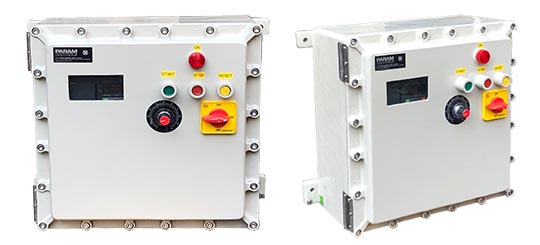 | Param Controls offers robust and reliable Flame Proof Panels designed for industrial electrical applications where enhanced enclosure protection and... View product → |
Heat, maintenance, dust hazards, and alternatives to Ex d
Frequent opening of an Ex d enclosure is a warning sign. Each access requires isolation, verification that no hazardous atmosphere is present, and careful preservation of flame paths, covers, fasteners, and certified cable entries. Large displays, dense terminations, or daily operator adjustments can make a safe-area location more practical.
Heat can also rule out a compact flameproof panel. Drives, contactors, relays, and power supplies raise internal and external temperatures, which can breach the temperature class or force component derating. Use a larger enclosure, reduce component loading, add heat sinks, or move heat-producing equipment outside the classified area.
Choose another protection concept when the panel needs frequent access or substantial heat removal:
- Purged and pressurized enclosures suit larger electronics and displays when the purge system, pressure monitoring, alarms, and shutdown interlocks are correctly designed.
- Intrinsically safe circuits suit low-energy instruments and signals, keeping ignition energy below the permitted limit rather than enclosing the whole control system.
- Increased-safety assemblies suit specified components that do not generate arcs, sparks, or excessive heat under the certified operating conditions.
- A safe-area installation with remote field connections often reduces maintenance time and hazardous-area equipment.
Do not treat combustible dust like gas or vapour. An Ex d gas enclosure does not automatically protect against dust; select equipment certified for dust, such as Ex t under IEC 60079-31. A high IP rating alone proves resistance to dust or water ingress, not explosion protection.
Frequently asked questions
Which industries commonly use flame-proof panels?
Oil and gas, chemical processing, pharmaceuticals, paint manufacturing, grain handling, food processing, mining, and wastewater facilities use them in areas where flammable gas, vapour, mist, or dust can form.
How does hazardous-area classification affect panel selection?
Select the panel using the area classification, gas or dust group, temperature class, protection concept, ingress-protection rating, and the certificate covering that exact equipment design.
What do flame-proof panels control?
They can house controls for motors, pumps, conveyors, heaters, compressors, lighting, instrumentation, alarms, and emergency shutdown systems when the equipment matches the certified application.
How can you verify a genuine certified flame-proof panel?
Read the nameplate for the Ex marking, certificate number, protection concept, gas or dust group, temperature class, ambient range, and IP rating, then confirm those details in the issuing certification body's database.
When is Ex d not the best protection method?
Use purged or pressurised enclosures when heat dissipation, frequent access, or large control assemblies make flame-proof construction impractical; use intrinsically safe circuits for low-power field instrumentation.