Choosing a soft starter involves more than matching a motor’s horsepower: the starting profile, load torque, duty cycle, protection scheme, and upstream power system all affect the result. By the end, you will be able to assess whether a soft starter fits the application, specify its rating, and identify the panel, protection, and commissioning details the manufacturer must support.
Key takeaways
- Use voltage ramping to reduce motor inrush and mechanical shock.
- Match starter current, motor rating, load torque, and starts per hour.
- Choose bypass, star-delta, VFD, or DOL when the application demands it.
- Verify SCR protection, airflow, wiring, settings, and testing before delivery.
How SCR control shapes motor acceleration and stopping
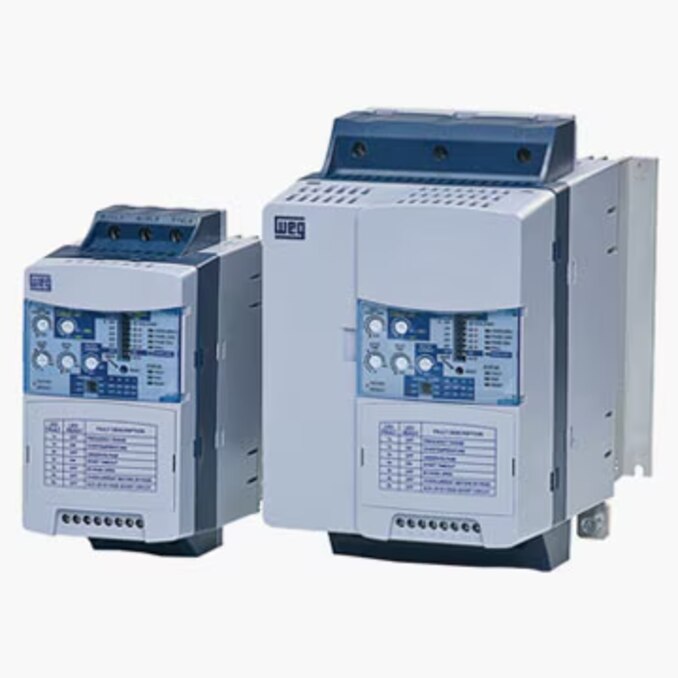
An SCR soft starter controls an induction motor by using thyristor phase-angle control to switch each AC waveform on for a selected portion of its cycle. It progressively increases the applied RMS voltage through a voltage ramp, allowing the motor to build torque without the abrupt inrush of direct-on-line starting.
Current limiting gives another boundary: the starter reduces voltage when current reaches the programmed limit. Current falls roughly in proportion to voltage, but induction-motor torque falls roughly with voltage squared.
Set the limit too low and a high-inertia conveyor or high-breakaway-torque pump can stall, prolong acceleration, or trip the starter even though its eventual running current is acceptable.
After the motor reaches operating speed, an integral or external bypass contactor commonly closes and removes the SCRs from the steady-state current path. That reduces semiconductor conduction losses and enclosure heat, but it does not remove the starter’s protective duties.
The motor then runs near line-frequency speed with normal slip; the starter does not regulate speed as a variable-frequency drive does.
A suitable model can also provide a controlled stop by reducing voltage over a programmed period. On pumps, that profile can reduce water hammer, but pipe length, pump inertia, static head, and check-valve behaviour still determine the result.
Commissioning must confirm actual acceleration time and current under load, because a soft starter cannot overcome a jam, excessive inertia, or inadequate starting torque.
Match the starter to the motor, load, and duty cycle
Motor full-load current is the starting point, not horsepower alone. Compare the starter’s continuous and starting-duty ratings with the motor nameplate current, supply voltage, locked-rotor current, acceleration time, ambient temperature, and required starts per hour.
| Condition | What to check | Selection consequence |
|---|---|---|
| Motor | Full-load current, voltage, service factor, locked-rotor current | Select a rating that covers the nameplate current and expected inrush |
| Load | Breakaway torque, inertia, friction, jam risk, and load profile | Use normal-duty or heavy-duty sizing according to the effort required to start |
| Duty cycle | Start duration, starts per hour, pauses, and enclosure temperature | Derate the starter or choose a larger frame when heat cannot dissipate between starts |
Voltage reduction lowers current roughly in proportion to voltage, but starting torque falls approximately with the square of the voltage ratio. At 70% voltage, the motor has about 49% of its full-voltage starting torque. Excessive current limiting can therefore stall a loaded conveyor, pump, fan, or compressor even when its running current is acceptable.
Before approval, verify these conditions under the actual load:
- Measure acceleration time and current from command to operating speed.
- Confirm the motor reaches speed before the starter’s ramp or thermal limit expires.
- Test the worst expected load, including a full conveyor, high pump head, or elevated ambient temperature.
- Increase the starter rating when long acceleration, frequent starts per hour, high inertia, or heavy breakaway torque causes repeated trips.
A starter’s overload model does not replace the motor manufacturer’s thermal limits. A jammed load can overheat the motor before normal running current reveals the problem.
Choose between a soft starter and other starting methods
Choose a soft starter when motor speed can remain near line frequency, but direct-on-line starting current and mechanical shock are unacceptable. It raises applied RMS voltage during acceleration, then the bypass contactor connects the motor to the supply. It does not hold a commanded speed as load changes.
| Option | Choose it when | Limitation or trade-off |
|---|---|---|
| Direct-on-line starter | The motor and supply can tolerate high inrush current and abrupt torque | Lowest complexity, but causes the greatest voltage dip and mechanical shock |
| Star-delta starter | The motor has six accessible terminals and the load starts with low torque demand | Lower starting torque and a transition torque dip can stall a loaded machine |
| Autotransformer starter | You need reduced-voltage starting with more starting torque than star-delta provides | Larger, costlier equipment with switching transients |
| Variable frequency drive (VFD) | The process needs continuous speed, torque, reversing, or energy control | Higher complexity; power conversion and harmonics continue during normal running |
| Soft starter | A pump, fan, conveyor, or similar load needs a controlled ramp but full running speed | No continuous speed regulation; confirm its duty rating and bypass arrangement |
Select the soft starter only after checking full-load current, locked-rotor current, acceleration time, ambient temperature, and starts per hour. Heavy inertia, a jammed conveyor, or inadequate starting torque can cause trips even when running current is acceptable.
If speed control is the actual requirement, choose a VFD; if the load tolerates abrupt starting, a direct-on-line starter may be sufficient.
Account for power-system effects and external protection
A lower starting current does not guarantee a stable supply. A long ramp can replace a sharp voltage dip with a smaller dip that lasts longer, so generator sizing must use starting kVA, ramp duration, allowable voltage variation, and other connected loads—not motor running kW alone.
Transformer capacity needs enough kVA for the motor’s starting current and the plant’s simultaneous load. Check the transformer’s impedance too: excessive impedance increases starting voltage drop, while a low-impedance transformer can expose the starter to higher fault current.
Select cables for motor full-load current, installation derating, permitted voltage drop during the start, and the starter’s short-circuit withstand—not only the cable’s steady-state ampacity.
Before setting the upstream protective device, document:
- Long-time and short-time settings that carry the starting current without nuisance tripping.
- Instantaneous or magnetic settings that remain coordinated with the starter and downstream devices.
- Prospective short-circuit current at the starter terminals.
- The tested fuse or circuit-breaker combination and the required Type 1 or Type 2 coordination result.
IEC 60947-4-2 covers AC semiconductor motor controllers and soft starters, but the soft-starter rating alone does not prove short-circuit coordination. Type 2 coordination requires the starter to remain suitable for further service after the specified fault, subject to the standard’s permitted conditions.
Treat motor overload protection separately from short-circuit protection. Set overload class, motor current, phase-loss, stall, and underload functions for the motor and duty; a bypass contactor reduces SCR heating after acceleration but does not remove those protections.
What a manufacturer must verify in the finished control panel
Do not approve the panel until the builder proves that the selected starter, protection, wiring, enclosure, and commissioning settings work as one system under the actual load.
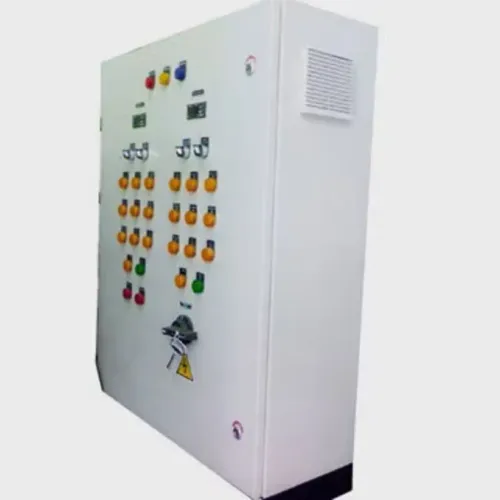
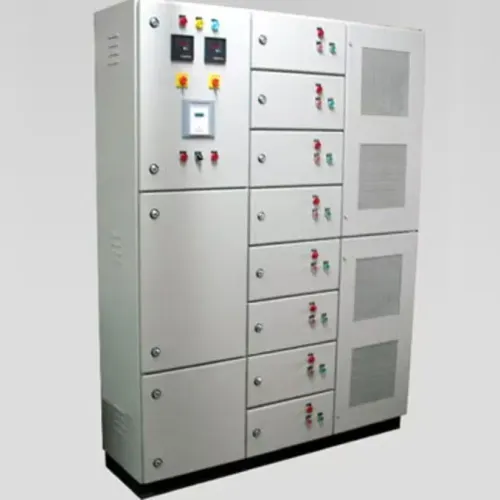
1. Require an approved schematic, single-line diagram, terminal schedule, and component data. Check motor voltage, full-load current, starting duty, control voltage, cable size, upstream short-circuit protective device, and prospective fault current. The soft starter must comply with IEC 60947-4-2, and the documented combination must state whether Type 1 and Type 2 coordination has been achieved.
2. Confirm the bypass contactor rating, interlocking, auxiliary feedback, and transfer sequence. It must close only after the motor reaches the intended operating state and open safely on a stop, trip, or failed start. Bypass removes SCR conduction losses but does not replace short-circuit protection, the motor overload, or the starter’s control protections.
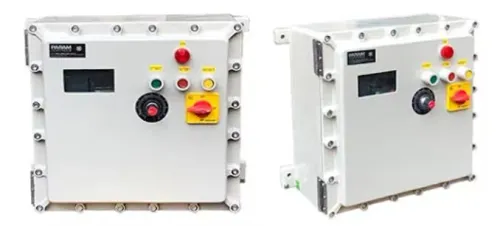
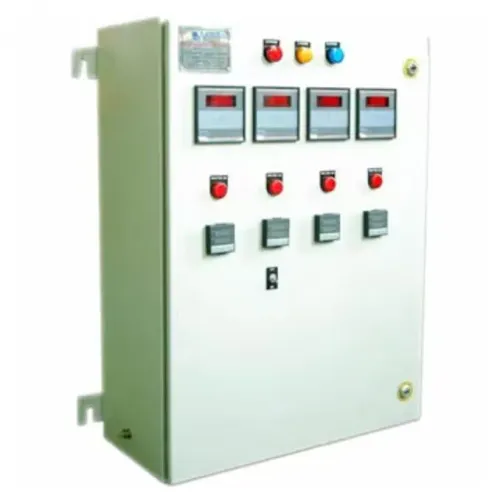
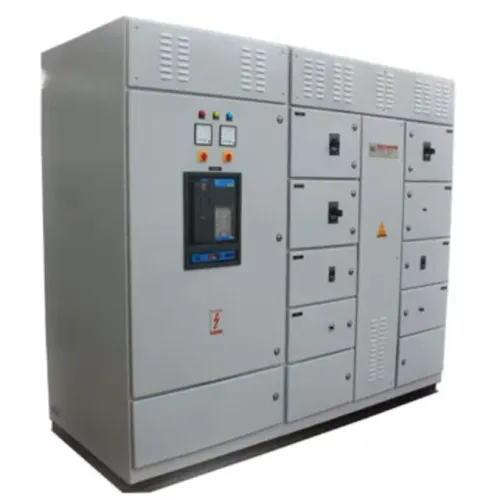
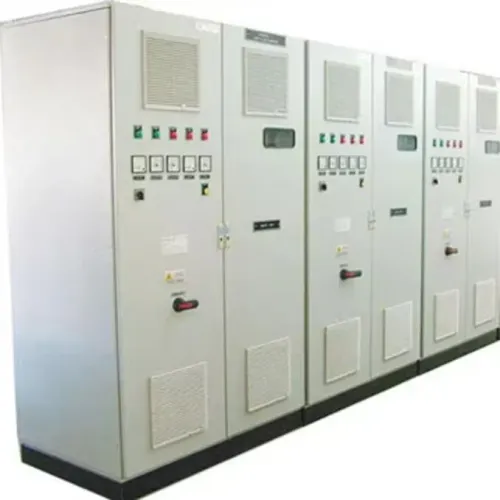
3. Inspect the finished panel for enclosure heat during starting and running. Verify ventilation, clearances, fan operation, ambient temperature, and the manufacturer’s derating curve. An external or absent bypass leaves SCR losses inside the enclosure, so a nominal current rating may not apply to the installed panel.
4. Require witnessed commissioning with the connected motor and load. Record acceleration time, starting current, overload settings, stop behaviour, bypass operation, fault indications, and restart response. A jammed conveyor or high-inertia pump can trip the starter even when running current is acceptable.
Param Controls can add value when its panel documentation records these tests rather than only listing the soft starter model.
Related product
 | Reliable Motor Starting & Control Solutions Param Controls manufactures and supplies Soft Starters designed to provide controlled and smooth starting... View product → |
Frequently asked questions
How does an SCR soft starter control motor acceleration and stopping?
Thyristors switch portions of each AC waveform, gradually increasing or reducing the RMS voltage applied to the motor. The voltage ramp controls acceleration, while a controlled voltage reduction can support soft stopping.
How do you match a soft starter to a motor and load?
Check the motor’s full-load current, supply voltage, phase arrangement, load torque, starting frequency, ramp time, and duty cycle. Pumps, conveyors, compressors, and high-inertia loads can require different settings and ratings.
When should you choose a soft starter instead of a VFD, star-delta starter, or DOL starter?
Choose a soft starter when you need reduced starting current and mechanical shock without continuous speed control. Use a VFD for variable-speed control, star-delta when its reduced-torque start suits the motor and load, and DOL when the supply and machinery tolerate full inrush.
What power-system effects and external protection must you account for?
Check the available short-circuit current, supply voltage, phase sequence, harmonics, upstream breaker or fuse coordination, motor overload protection, earthing, bypass arrangement, and enclosure cooling.
What must a manufacturer verify in the finished soft starter control panel?
Verify component ratings, wiring and torque, control logic, interlocks, protective-device coordination, ventilation, terminal labels, insulation checks, phase sequence, alarm operation, ramp settings, and a documented functional test.