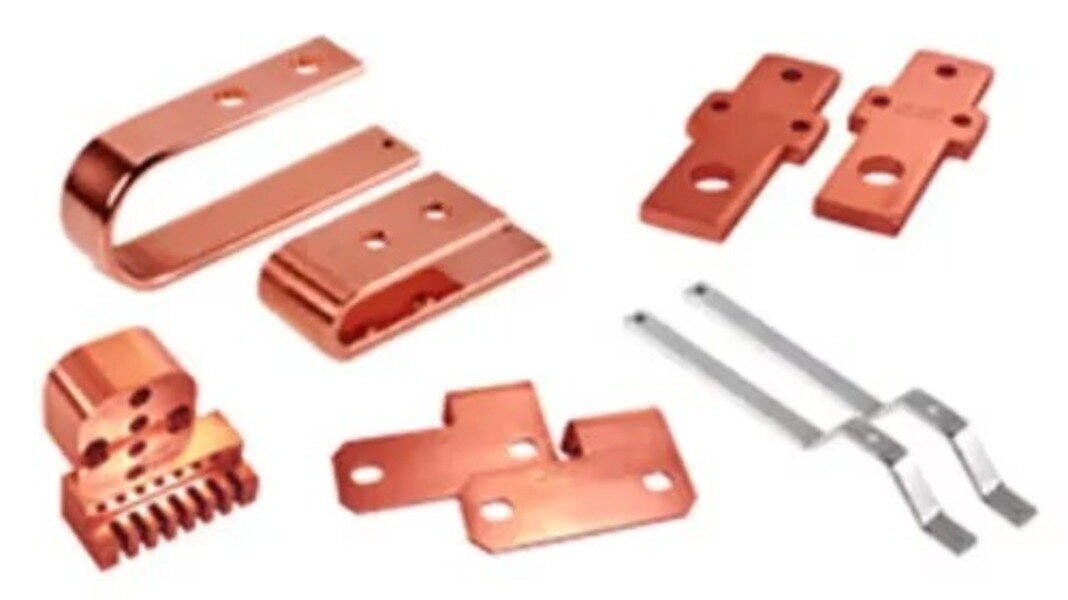
Copper earns its premium when limited panel space, high fault duty, frequent bolted joints or difficult operating conditions make conductivity and connection reliability more valuable than material cost and weight. By comparing copper with aluminium against current, temperature, fault withstand, site exposure and fabrication quality, you can approve the right bus-bar system instead of choosing by price per kilogram.
Key takeaways
- Choose copper when space, joint reliability or fault duty outweighs material cost.
- Verify continuous current, temperature rise and short-circuit withstand before approving the bar.
- Account for Nashik heat, dust, humidity and the panel’s operating function.
- Inspect plating, joint design, clearances, test records and material documentation.
When does copper justify its higher cost than aluminium?
Copper justifies its premium when compact dimensions, repeated joints or demanding fault duty outweigh aluminium’s lower material cost. Copper resistivity 0.01724 Ω·mm²/m at 20 °C gives lower resistance for the same bar size, so you can fit the required capacity into a narrower enclosure.
| Factor | Copper bus bar versus aluminium | Decision signal |
|---|---|---|
| Conductivity | Aluminium needs about 1.6 times the cross-sectional area comparison for similar resistance. | Choose copper when chamber width or phase spacing is tight. |
| Weight | Aluminium is about one-third as dense; after enlarging the bar, aluminium bus bar weight remains roughly half that of copper for equal resistance. | Choose aluminium when lifting, supports and transport dominate. |
| Material cost | Copper costs more per kilogram, while aluminium uses more area and may need different tooling. | Compare the complete fabricated assembly, not the metal invoice. |
| Joints | Copper-to-copper joints avoid the oxide and thermal-movement issues of mixed metals. Aluminium’s 23 µm/m·K expansion exceeds copper’s 16.5 µm/m·K. | Choose copper for frequent bolted joints, provided torque, plating and contact preparation are controlled. |
| Installation space | Larger aluminium bars require more clearance, supports and bending room. | Choose copper when a compact PCC, MCC or distribution chamber matters. |
Aluminium is the better choice when the enclosure has room, current is moderate and a verified design meets temperature-rise and short-circuit requirements. Copper loses its advantage if poor torque, damaged plating or contaminated joints create resistance; specify compatible terminals for every mixed-metal connection.
Does the proposed bus bar meet current, temperature and fault requirements?
A copper bar passes the continuous current check only when its calculated hot temperature stays within the limit for the completed assembly. Compare the design current with the proposed continuous current rating, then calculate losses using hot resistance: R(T) = R20[1 + 0.0039(T − 20)].
Using resistance at 20 °C understates I²R heating and voltage drop.
IEC 61439 temperature rise verification must reflect the actual enclosure, not an open-air catalogue table. Check bar cross-section, orientation, spacing, ventilation, joints and nearby heat sources at 40 °C ambient; the 24-hour average ambient must not exceed 35 °C. A hotter Nashik installation requires derating or design verification at that site temperature.
The fault calculation must cover short-circuit withstand I²t and electrodynamic forces. For thermal withstand, confirm that the prospective fault energy satisfies the conductor’s adiabatic limit, commonly expressed as I²t ≤ k²S², using the specified copper temperature limits and fault-clearing time. A bar can survive the heating and still fail mechanically.
Require these three pieces of evidence:
- The IEC 61439 design-verification report or tested assembly reference for temperature rise.
- The short-circuit calculation showing prospective current, peak current, duration and I²t.
- The support calculation showing phase spacing, support spacing, joint strength and forces between parallel bars.
If parallel strips are used, verify equal current sharing and clearance; extra joints create extra resistance and heating. A verified assembly matters more than a large cross-sectional area alone.
How do Nashik conditions and panel function change the choice?
Select copper when limited enclosure space, high fault duty or repeated bolted connections outweigh its higher mass and material cost. Nashik control panel conditions matter: heat raises copper resistance, while dust humidity chemical exposure can attack exposed interfaces and contaminate insulation.
An indoor outdoor panel needs a finish matched to the enclosure, not a default material choice.
| Panel type | Preferred copper choice | Why |
|---|---|---|
| PCC or power-distribution panel | Tinned copper for outdoor or polluted service; bare copper indoors | Tinning stabilises bolted joints against humidity and contamination; bare copper suits a clean, sealed room |
| MCC or drive panel | Tinned copper with insulated supports and flexible links | Frequent switching, vibration and heat make joint stability and phase-to-phase clearance important |
| PLC panel | Insulated bus bar or finger-safe tinned copper | Insulation reduces accidental contact and dust tracking near low-voltage control wiring |
Choose bare copper only when the panel is clean, dry and accessible for inspection. Choose tinned copper where condensation, sulphur compounds, process vapours or outdoor air can reach joints; plating improves surface stability, not bulk conductivity. If plating is scratched, clean and prepare the joint as specified rather than bolting over damage.
Use an insulated bus bar when touch protection, compact segregation or close proximity to PLC wiring governs the design. Confirm its insulation temperature rating and creepage distance. For aluminium cables entering a copper chamber, specify a rated transition terminal; a generic bolt joint can loosen as the two metals expand differently.
What fabrication details and documents should you inspect?
Reject any bar that fits the drawing only after forcing holes, bends or supports into alignment. A bus bar fabrication inspection must verify flat dimensions and hole position against the approved drawing, including phase spacing, edge clearance, support locations and insulation distance after bending.
Ask the supplier for these fabrication records and check these physical features:
- Copper grade, temper and material certificate, with heat or batch number and resistivity or conductivity values.
- Bend radius, bend angle and crack-free inner surfaces; a sharp bend can weaken the bar and reduce clearance.
- Deburring of every punched or drilled hole and cut edge; burrs damage insulation and create stress concentrations.
- Plating coverage and thickness, especially on bolted joint faces, with no peeling, contamination or exposed base metal where plating is specified.
- Hole diameter, washer bearing area, bolt grade and the tightening torque or calibrated torque method for each joint.
- Support spacing, phase identification, flexible links and terminal transitions, checked against the short-circuit design.
| Evidence | What it proves | Failure revealed |
|---|---|---|
| Approved fabrication drawing | Dimensions, clearances and assembly sequence are controlled | Site-made alterations |
| Material certificate | Correct copper grade and temper arrived | Wrong or untraceable stock |
| Plating report or coating inspection | Contact surfaces have the specified finish | Oxidation and rising joint resistance |
| Torque and inspection record | Bolted joints received controlled contact pressure | Loose, overheated connections |
Param Controls can be asked to return this inspection pack with the fabricated bar, rather than supplying a visually acceptable part without traceable evidence.
Related products
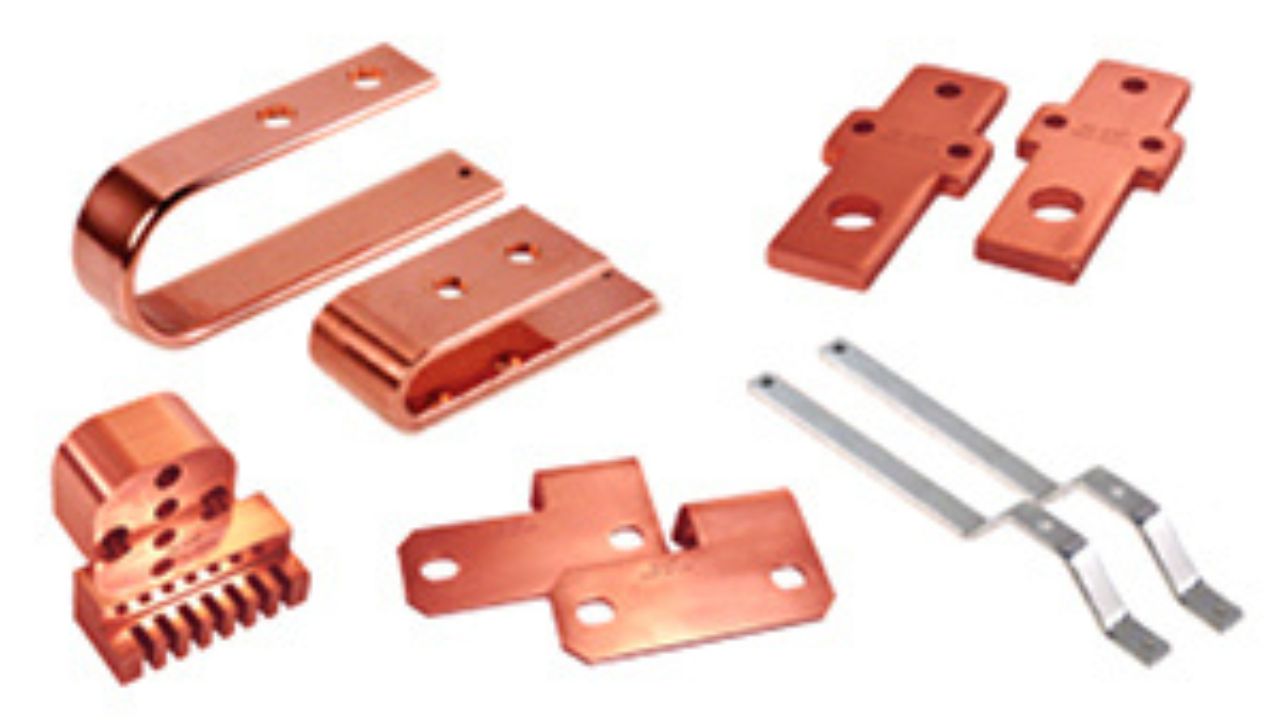 | High-Quality Copper Bus Bars for Electrical Applications Param Controls manufactures and supplies Copper Bus Bars and Copper Bus Bar Assemblies for a... View product → |
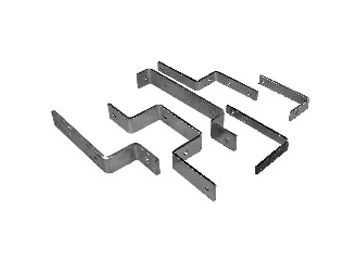 | Sheet Metal Parts Precision Bus Bar Fabrication for Electrical & Industrial Applications Param Controls manufactures and supplies Bus Bar Fabrication using quality... View product → |
What final checks show that copper is worth choosing for your panel?
Approve copper only after it wins a documented comparison of lifecycle maintenance, termination quality, mixed-metal behaviour, neutral loading and occupied space over a verified aluminium design.
| Option | Final check | Copper is worth choosing when |
|---|---|---|
| Copper | Space and joints | A compact bar, frequent bolted joints or high fault duty reduces enclosure size and supports dependable bus bar joint reliability. |
| Aluminium | Weight and cost | The larger cross-section fits, mass matters, and verified temperature-rise and fault withstand values remain compliant. |
| Either | Lifecycle maintenance | Include plating, supports, lugs, flexible links, inspection access and thermal scanning—not just metal price. |
Demand a joint schedule showing contact surfaces, bolt grade, washers and tightening torque. Use a calibrated torque method; loose or contaminated joints create resistance and heat in either material. Check burr removal, plating damage and access for future inspection.
Do not bolt aluminium directly to copper. Where dissimilar conductors enter the chamber, specify a copper aluminium transition connector rated for the current, temperature and fault duty. The 16.5 µm/m·K expansion of copper versus approximately 23 µm/m·K for aluminium makes cyclic movement a termination concern.
Finally, calculate neutral loading from the actual nonlinear loads. A neutral bus harmonics assessment must account for triplen harmonic current from variable-frequency drives, switched-mode power supplies and LED drivers; a neutral sized only from phase current can overheat. Choose copper when these checks reveal clear space or joint advantages, not because copper is automatically superior.
Frequently asked questions
When does copper justify its higher cost than aluminium?
Copper earns its premium when a compact enclosure, repeated bolted joints, lower resistance or demanding short-circuit duty matters more than aluminium’s lower material cost.
What must a bus bar meet before approval?
Check continuous current, allowable temperature rise, short-circuit withstand, insulation clearances and the enclosure’s available space against the panel design.
How do Nashik conditions affect the copper-versus-aluminium choice?
Evaluate ambient heat, dust, humidity, ventilation and altitude at the installation site, then confirm that the panel’s operating function matches the selected conductor.
Which fabrication documents should you inspect?
Request material certificates, copper grade, thickness and width records, plating details, joint drawings, bending and drilling tolerances, inspection reports and routine-test results.