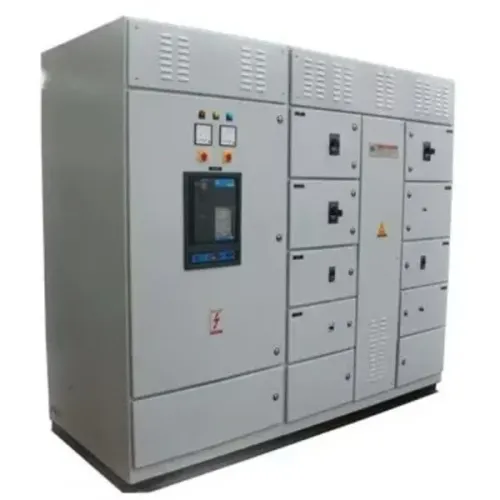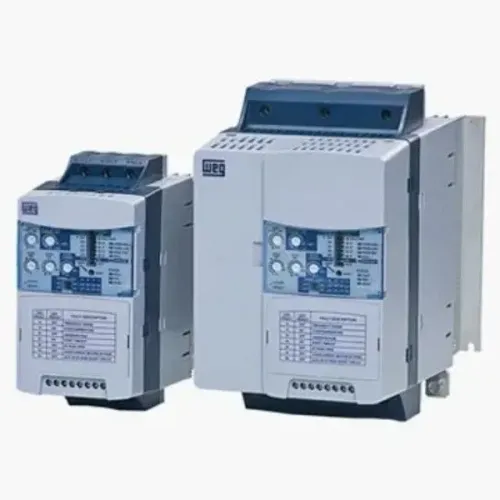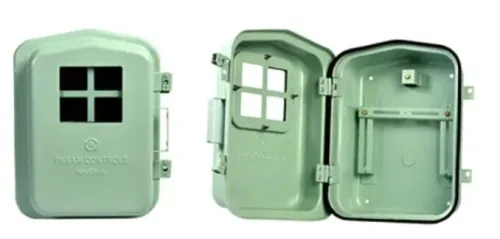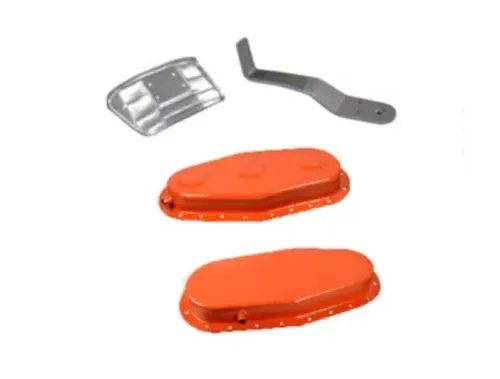
A test bench order can slip long before fabrication starts: an undefined test sequence, late instrument choice, revised drawings, or an unplanned witnessed FAT can each move the promised date. By the end, you will have a stage-by-stage procurement plan, a quotation brief, and checks for capability, documentation, delivery, and commissioning.
Key takeaways
- Freeze voltage, current, phases, test points, and utilities before requesting fabrication.
- Compare instruments by accuracy, range, calibration status, and measurement records.
- Define FAT acceptance checks, test procedures, drawings, and reports in the quotation.
- Set document, inspection, dispatch, and commissioning dates—not only a delivery date.
Where the Procurement Timeline Actually Slips
Electrical test bench delays Nashik buyers encounter usually begin during technical clarification, not assembly. An incomplete enquiry leaves voltage, current, phase arrangement, test points, load-bank capacity, instruments, accuracy, safety sequence, utilities, and standards open to interpretation. The test bench procurement timeline then stretches through quotation revisions and delayed component selection.
| Stage | Typical hold-up | Check before release |
|---|---|---|
| First enquiry and technical clarification | Missing ratings, test sequence, dimensions, or applicable standard | Issue one complete requirement sheet |
| Quotation and design approval | Drawing revisions, unapproved PLC or instrument choices | Approve the schematic, layout, I/O list, alarm matrix, and customer-supplied components |
| Capacity booking | No slot for the required maximum voltage, current, short-circuit injection, load-bank capacity, simultaneous positions, or PLC/I/O simulation | Confirm capability and reserve the FAT slot in writing |
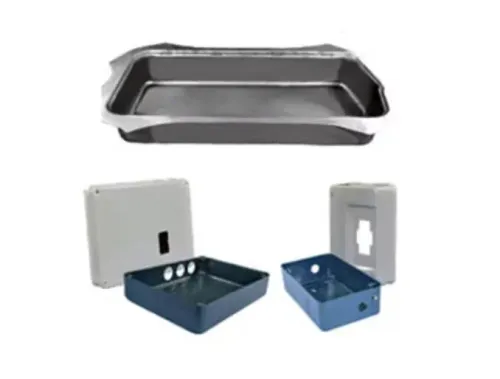
| Fabrication and finishing | Immature flat patterns, gland-plate changes, bend errors, weld distortion, inserts, masking, powder-coating cure, or rework | Freeze the 3D model, bend tolerances, finish, and inspection points before accepting the fabrication lead time |
| Wiring and inspection | Late components, wiring corrections, incomplete records, or failed checks | Set inspection hold points and identify every supplied part |
| FAT and dispatch | Unfrozen procedure, late witness notice, or punch-list disagreement | Define the FAT procedure, notice period, permitted punch-list items, and retest rule |
| Transport and commissioning | Site power, foundations, utilities, or operators are unavailable | Confirm access, unloading, cables, earthing, and installation dates |
A power-on check alone will not prove PLC interlocks, alarm texts, network addressing, fail-state behaviour, or recovery after power loss. Reserve time for those tests before dispatch, not after installation.
Freeze the Quotation Package Before Fabrication
Do not request a firm delivery date until the electrical test bench quotation package has one controlled revision and a named approval owner. An incomplete package produces allowances in the price, followed by drawing changes, component substitutions, sheet-metal rework, and a revised FAT date.
1. Send a complete technical schedule: test voltage and current, phase arrangement, frequency, test points, load type, measurement instruments and accuracy, operating sequence, safety interlocks, enclosure dimensions, utilities, and applicable standards.
State the required hipot voltage and duration from the construction standard, rated insulation voltage, circuit category, and test points; “2 kV hipot” alone is incomplete.
2. Require a general arrangement drawing showing footprint, working height, access doors, gland plates, ventilation, operator controls, cable entry, and mounting points. Freeze the 3D model or flat pattern, bend tolerances, finish, threaded inserts, weld requirements, and inspection points before accepting a firm fabrication date.
3. Issue the single-line diagram, wiring diagram, I/O list, alarm matrix, sequence description, and instrument list with revision numbers and approval dates. Put wiring diagram revision control in the purchase order, including who may approve changes and which changes require re-quotation.
4. Freeze the approved bill of materials and customer-supplied components. Require written approval for any breaker, relay, drive, terminal, or power-supply substitution, and identify whether it triggers design reassessment, drawing revision, or repeated FAT.
5. Attach the FAT procedure, witness notice period, permitted punch-list items, and the rule for repeating FAT after a failed or changed test. State which functions a UPS supports during an outage and which high-power tests become invalid.
Check the Bench Against the Product and the Test
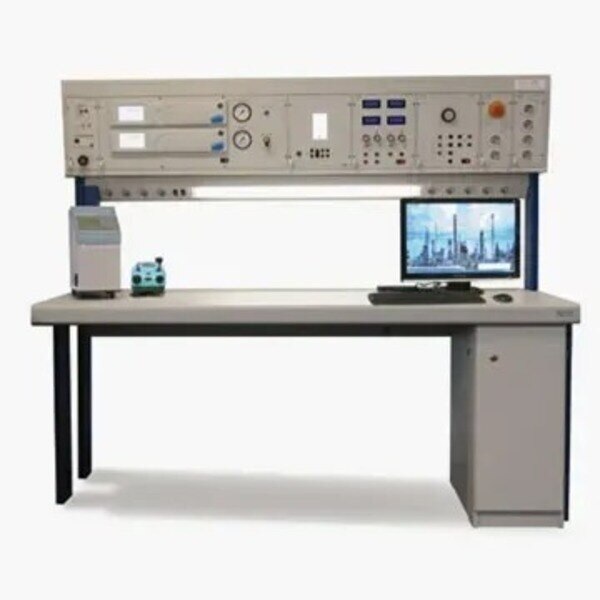
A correct selection matches the product envelope, test method, and acceptance records—not just the bench’s footprint. A test bench versus workbench comparison should cover fixtures, guarding, utilities, cable routing, and repeatable connections; a functional test station also needs the required sequence, PLC or I/O simulation, alarms, and interlocks.
Before approval, ask the supplier to show:
- Product dimensions, fixture locations, access clearances, operator reach, enclosure size, and the number of simultaneous test positions.
- Maximum test voltage and current, phase arrangement, frequency, load-bank capacity, and short-circuit-injection capability.
- Whether the proposal includes a dedicated hipot tester and insulation resistance tester, or only provisions for instruments supplied later.
- Measurement ranges, accuracy, resolution, and connection points for every required voltage, current, resistance, and timing measurement.
- The proposed verification checklist covering enclosure and protective-circuit continuity, wiring and component conformity, dielectric properties, protective measures, and functional operation.
- For insulation resistance, the test voltage, duration, test points, ambient conditions, and disconnected sensitive devices. A bare megohm result cannot be reproduced.
- For hipot testing, the applicable construction standard, rated insulation voltage, circuit category, test points, voltage, and duration. “2 kV hipot” alone is incomplete.
- For critical instruments, serial number, calibration date, due date, range, stated uncertainty, and ISO/IEC 17025 accreditation for that measurement.
Reject a bench that cannot demonstrate these limits and records before fabrication. A supplier may have assembly capacity while its high-current or witnessed-FAT slot remains unavailable.
Define FAT, Verification, and Measurement Records
Approve dispatch only after factory acceptance testing (FAT) proves that the assembled bench matches the approved drawings, operates safely, and produces repeatable measurements. FAT is the witnessed acceptance event; verification is the documented examination of construction, protection, and function; measurement records show the actual values obtained, not merely “tested” or “passed.”
1. Compare the built assembly with the approved schematic, wiring schedule, I/O list, alarm matrix, enclosure layout, component list, and revision status. Record enclosure, protective-circuit continuity, wiring, component identity, interlocks, emergency stop, indicators, sequence operation, and every agreed test point.
2. Request the completed IEC 61439 routine verification checklist where the assembly falls within its scope. It should cover dielectric properties, protective measures, construction, and functional operation. Do not accept one panel’s routine certificate as design verification for a different assembly with changed dimensions, busbars, cooling, short-circuit design, or component system.
3. Confirm the hipot test voltage, duration, circuit category, rated insulation voltage, and test points against the applicable construction standard. “2 kV hipot” alone is incomplete and can be unsuitable for particular circuits.
4. Demand an insulation resistance test record stating test voltage, duration, test points, measured values, ambient temperature and humidity where relevant, and disconnected electronic devices. A bare megohm figure cannot be reproduced or fairly compared.
Close every safety-critical FAT failure before release. List remaining punch-list items, owners, deadlines, and the rule for retesting; a changed or failed test may require a new witnessed FAT before packing and dispatch.
Protect the Dispatch and Commissioning Dates
Put six dates in the purchase order, not one: panel completion, FAT readiness, FAT acceptance, packing release, dispatch, and delivery. A mechanically complete bench remains undeliverable if the FAT punch list, customer witness approval, calibration records, or bought-out components are still open.
| Milestone | Release evidence | Buyer check |
|---|---|---|
| Panel completion | Assembly, wiring, labels, and drawings finished | Confirm the agreed revision and component list |
| FAT readiness | Test procedure, I/O list, alarm matrix, and instruments available | Receive the FAT notice before the witness deadline |
| FAT acceptance | Recorded results and signed punch-list status | Define which punch-list items block dispatch |
| Packing release | Approved documents, calibration records, and protective packing | Verify the calibration certificate ISO/IEC 17025 details |
| Dispatch | Transport route, insurance, lifting points, and consignee confirmed | Give the carrier unloading instructions |
| Delivery | Site access and receiving team available | Confirm the date supports installation and test bench commissioning |
Before a Nashik industrial delivery, complete these site checks:
- Clear the route from gate to installation point; measure doors, turns, lift capacity, and floor loading.
- Provide the specified supply, earthing, compressed air, network points, lighting, and safe working clearance.
- Send customer-supplied PLCs, fixtures, products, and cables by the agreed freeze date.
- Check each critical instrument’s serial number, calibration date, due date, range, uncertainty, and laboratory accreditation for that measurement.
Param Controls can use this readiness pack to separate a transport delay from a site-preparation failure. A certificate alone does not prove measurement suitability.
Related product
 | Reliable Electrical Testing Solutions for Industrial Applications Param Controls manufactures and supplies Electrical Test Benches designed for... View product → |
Frequently asked questions
Where do electrical test bench procurement delays usually occur?
Delays usually occur during technical clarification when voltage, current, phase arrangement, test points, load-bank capacity, instruments, accuracy, safety sequence, utilities, and standards are not specified.
What should buyers freeze before test bench fabrication?
Freeze the quotation package, including the electrical single-line diagram, load details, test points, instrument specifications, safety sequence, utility requirements, applicable standards, drawings, and acceptance criteria.
What should a buyer check during factory acceptance testing?
Define FAT checks for wiring, insulation, earthing, interlocks, emergency stops, instrument readings, load performance, labels, documentation, and the measurement records the supplier must provide.
How can buyers protect dispatch and commissioning dates?
Set dates for design approval, long-lead component release, FAT, document submission, inspection, packing, dispatch, site readiness, installation, and commissioning, with named responsibilities for each milestone.